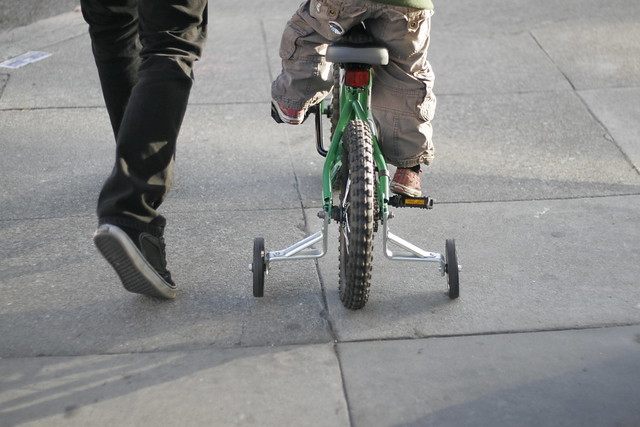
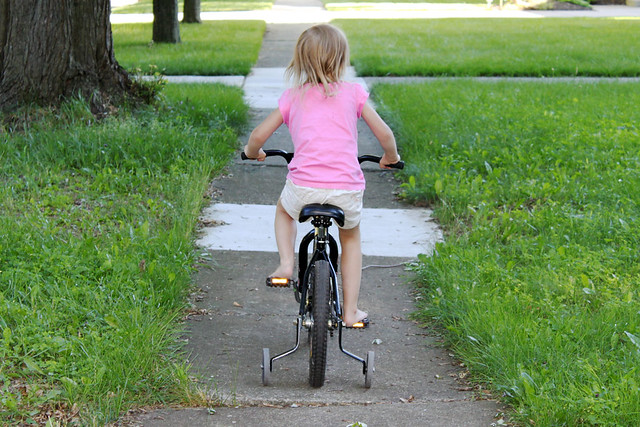
Most, if not all, of us can ride a bike. Many of us learned to pedal with a tricycle. Many of us moved to a 'big kid bike' by first using training wheels.
Three wheels in the back added stability, which bred confidence. Eventually the grownup who was walking with us gave us a push and then they were no longer needed. We could ride a bike.
I chose these images because learning to ride a bike is a big deal and it is an illustration nearly all kids can relate to. I do lots of talking about learning to ride a bike as we launch our memoir unit.
These images could be used to get kids thinking about their memories and experiences. Simply putting the photos before my students would get them talking. Talking is a fabulous pre-writing activity. Before they realize it I have gotten them from gabbing with their neighbor to pushing lead through their notebooks, where the work of the writer continues.
Another reason I chose these two images is because they are too centered. As we take our memoirs into digital storytelling we could revisit these images and talk about the rule of thirds.
How could they improve the composition of these photos? What is gained and lost by each change? Could they take a better one themselves? How will this knowledge impact their storyboarding? What else do they wonder about?